Credit Card vs. Debit Card: What’s the Difference?
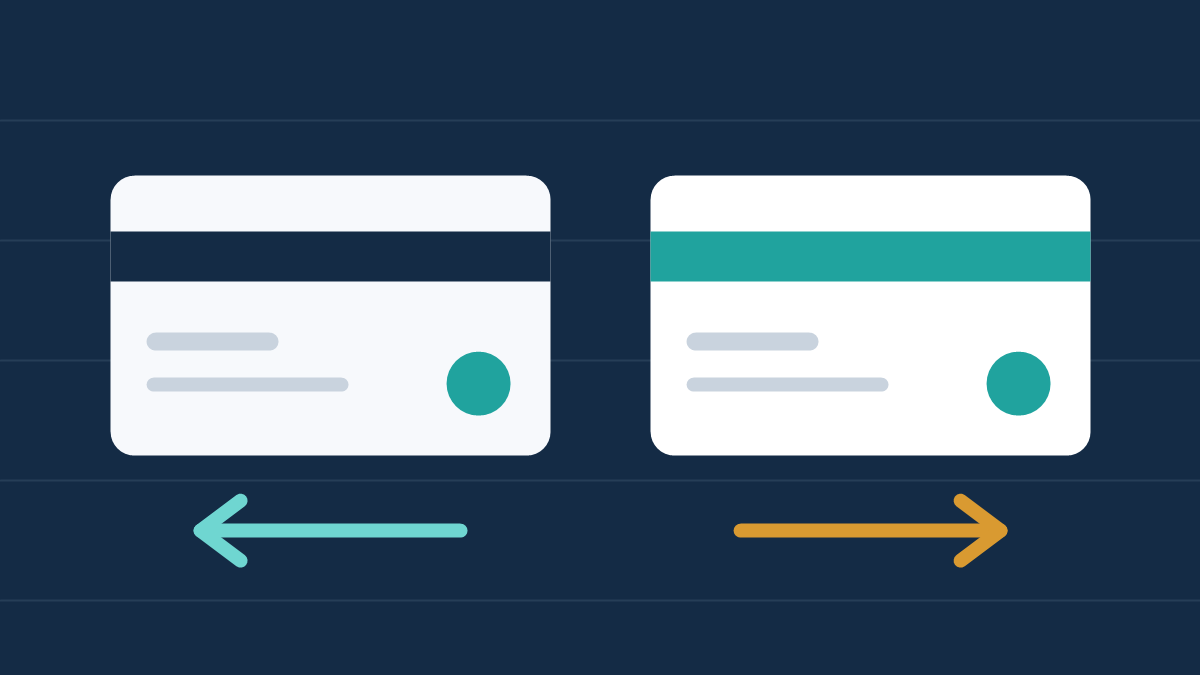
The main difference is whose money you are spending. A debit card takes money straight from your bank account, while a credit card borrows from the issuer, and you repay it later. That one difference shapes how each card affects your credit, what happens when fraud strikes and what mistakes can cost you.
Key Takeaways
- Credit cards can build a credit history. Debit card use generally does not.
- For a lost or stolen credit card, the FTC says the most you might owe is $50.
- For a debit card, your exposure can grow the longer you wait to report it, up to all the money taken and possibly more.
- Credit cards can charge interest if you carry a balance. Debit cards can trigger overdraft fees if you have opted in.
- Many people use both, each for what it does best.
Credit card vs. debit card at a glance
| Feature | Credit card | Debit card |
|---|---|---|
| Source of funds | A revolving loan from the issuer | Your checking account |
| Spending limit | Your credit limit | Your available balance, plus any overdraft coverage |
| Builds credit history | Yes, when the issuer reports your activity | Generally no |
| Interest | Yes on carried balances, though usually avoidable on purchases by paying in full | None, because you are not borrowing |
| Common fees | Annual, late, balance transfer, cash advance, foreign transaction | Overdraft, out-of-network ATM, foreign transaction, depending on the account |
| Unauthorized use | Up to $50 for a lost or stolen card; $0 if only the number is misused | $0 to unlimited, depending on when you report |
| Money during a dispute | Your own bank balance is not touched | Money may already have left your account |
| Rewards | Common on many cards | Less common |
| Application | Credit application, reviewed by the issuer | Usually comes with a bank account |
Fraud and lost cards: the biggest practical difference
Federal law protects both kinds of cards, but not equally. These are the limits the FTC describes.
Credit cards
- Report the card lost or stolen before it is used: you are not responsible for unauthorized charges.
- Report it after it has been used: the most you might owe is $50.
- Your account number was used, but you still have the card: you are not responsible for unauthorized charges.
ATM and debit cards
| When you report a lost or stolen card | Your maximum loss |
|---|---|
| Before any unauthorized charges | $0 |
| Within 2 business days after you learn of the loss or theft | $50 |
| More than 2 business days after you learn of it, but within 60 calendar days after your statement is sent | $500 |
| More than 60 calendar days after your statement is sent | All the money taken from your account, and possibly more, such as money in linked accounts |
Your bank or network may offer stronger protection under its own policies, so check your account terms. The legal limits above are the baseline.
With debit, there is a practical issue too: stolen money has already left your account, which could affect your bills while the problem is being resolved. With a credit card, the disputed amount is on the issuer’s balance sheet, and you can dispute a charge on your bill.
Effects on your credit
The CFPB says that using a debit card or cash does not help you build a credit history. A credit card can, if the issuer reports to the bureaus and you manage it well. It can also hurt, since missed payments and high balances can appear on your reports. See how to build credit with a credit card for the habits that matter.
What each card can cost you
Credit card interest
Carrying a balance can be expensive. The Federal Reserve’s preliminary average was 21.19% across all card accounts in August 2026. Pay in full by the due date, and you generally avoid interest on purchases. Our guide on APR explains how this works.
Debit card overdrafts
Under CFPB rules, banks generally cannot charge overdraft fees on one-time debit card or ATM transactions unless you have opted in, and you can revoke that choice at any time. CFPB research found that opted-in consumers paid considerably more in overdraft and non-sufficient funds fees: an average of $22 a month, compared with $3 for those not opted in, in that 2017 study.
Example: a $1,200 laptop
A hypothetical comparison:
- Debit, with $1,500 in checking. You pay no interest, but your balance falls to $300. If rent is due next week, a problem could follow.
- Credit, paid in full by the due date. You pay no interest with a grace period, and you may earn rewards or get card benefits.
- Credit, carried at 21.19% with $100 a month. Paying it off takes about 14 months and costs roughly $161 in interest. The interest calculator can show your own scenario.
When to use which
A credit card can make sense for
- Building a credit history.
- Online purchases and large purchases, where stronger fraud limits and dispute options help.
- Earning rewards, if you pay in full.
A debit card can make sense for
- Sticking to money you already have, if overspending is a concern.
- Getting cash from an ATM, instead of paying for a costly cash advance on a credit card.
- Everyday spending, if you prefer to avoid debt altogether.
Important Considerations
- Check your statements regularly. With a debit card, reporting time can directly affect what you lose.
- Hotels, rental cars and gas stations may place temporary holds. On debit, a hold can tie up money in your account.
- Prepaid cards are a separate product with their own rules, and they generally do not build credit either.
The bottom line
A debit card helps you spend only what you have, while a credit card offers stronger limits on fraud losses and a way to build credit, provided you can pay on time. Neither is better for everyone. If you are ready to try credit, start with what to look for in a first card.
Frequently Asked Questions
Is it safer to use a credit card or a debit card online?
A credit card generally limits your risk more. Federal limits on credit card fraud are stricter, and any stolen amount is not taken directly from your bank account while the issue is addressed.
Does a debit card build credit?
Generally no. The CFPB lists debit cards among the payment methods that do not help you build a credit history, since you are not borrowing money.
Can I choose “credit” when using my debit card?
Some terminals let you run a debit card that way, but it is still a debit card drawing on your bank account. It does not build credit or change the card into a credit card.
Should I stop using my debit card completely?
Not necessarily. Many people use a debit card for ATM cash and a credit card for other purchases. Choose what keeps you on budget and protects your account.
Related Articles
Best Credit Cards for Beginners: What to Look For Before You Apply
There is no single best first card. Here is how to compare secured, student and starter cards on the costs and features that matter when you are new to credit.
Read More
How to Build Credit With a Credit Card
A credit card can build your credit history if you use it carefully. Here are the habits that matter, what does not help, and the mistakes that can set you back.
Read More
What Is APR on a Credit Card? A Beginner’s Guide
APR is the yearly price of borrowing on a credit card. Learn the different types, how issuers turn APR into a daily charge, and how the grace period can spare you from paying it.
Read MoreSources
Checked November 5, 2026.
- Lost or stolen credit, ATM, and debit cards. Federal Trade Commission.
- Regulation E, section 1005.6: Liability of consumer for unauthorized transfers. Consumer Financial Protection Bureau.
- What are some ways to start or rebuild a good credit history? Consumer Financial Protection Bureau.
- A closer look: Overdraft and the impact of opting-in (2017). Consumer Financial Protection Bureau.
- Credit cards. Consumer Financial Protection Bureau.
- G.19 Consumer Credit, release of October 7, 2026. Federal Reserve Board.
Financial disclaimer: This article is for general education and is not individual financial, legal or tax advice. Card issuers decide eligibility and set their own terms, which can change. We cannot guarantee approval or any credit score result. Check current terms with the issuer before you apply. Read the full disclaimer.